Solar Panel Cleaning · Cambria
Solar Panel Cleaning in Cambria
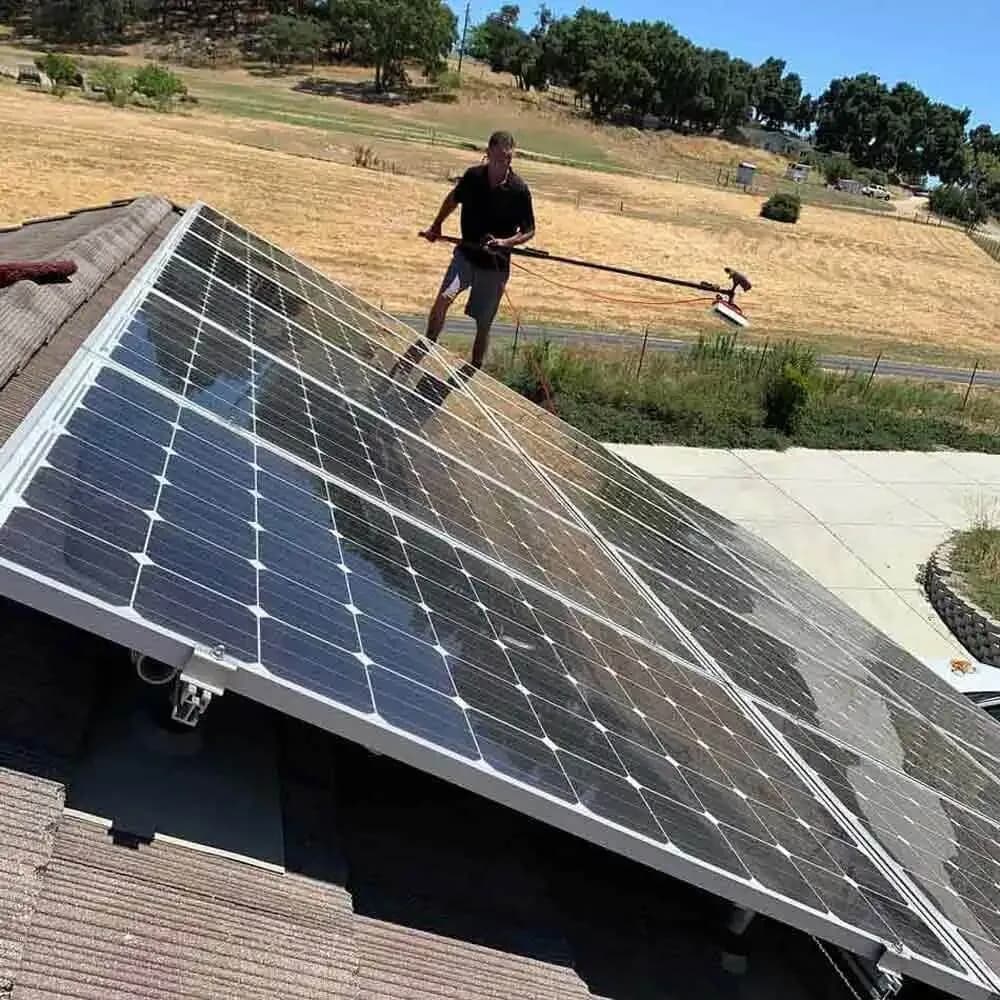
A solar module is the hottest surface on a Cambria roof, so Monterey pine pitch landing on it spreads and keys into the glass instead of sitting there as a bead. It is also the one deposit in this town that nobody is allowed to scrape off.
Serving Cambria · License #17881 · Insured to $1,000,000
Get a quote for solar panel cleaning in Cambria
Pitch lands on the one surface up there that is hot
Sun on a working module drives the glass well past the temperature of everything around it, past the shingle it sits above and past any window on the house below. That changes what pine resin does when it arrives. On cool glass a drop of pitch cools with the surface and sets where it lands, as a raised bead you can find with a fingernail. On a hot module it softens instead, spreads outward, wicks down into the texture of the anti reflective coating and only sets once the sun comes off it in the evening. Same tree, same sap, and a deposit keyed into the surface rather than sitting on it.
That also makes it the deposit least suited to being attacked. The anti reflective coating on panel glass is thin, and a scraper, a pad or a scouring cloth takes it off permanently, which costs output for the life of the panel to save one afternoon. Resin on a Cambria array gets soaked with purified water and lifted with a soft brush over several passes, and some of it genuinely comes off across two visits rather than one. A drop of pitch is opaque, so it blocks a cell outright instead of dimming the module the way a haze does, and a handful of beads is worth that slow work rather than a quick pass.
The rest of the year the trouble is the rain rather than the sun. Rain reaching a Cambria array has come through a Monterey pine first, so what lands on the glass is not clean water. It carries tannin off the needles and the bark, and when the water goes the color stays behind as a thin brown cast keyed onto the surface. That cast is cumulative, which is what makes a Cambria array the wrong thing to leave to the weather. The glass under this canopy rarely dries long enough for needles, pollen or grit to blow clear either, so the loose material beds into the cast instead of leaving with the wind.
What changes in Cambria
The halo matters more than the bead
What people notice on a Cambria array is the raised drop of pitch. What actually costs the module is the thinner ring of resin around it, spread outward by the heat of the working panel and holding a film of needle dust and pollen across a far wider patch than the drop itself covers. That halo is why the job here is repeated passes with a soft brush rather than picking off beads.
Waiting for the rain makes it worse here
Owners under the pines put a wash off because winter is coming and winter will rinse it. On this stretch the rain arrives through a Monterey pine canopy, so every wet week lays another weak brown solution across the modules instead of taking one off. A Cambria array is routinely in worse shape in February than it was in November.
The growth lives under the array, not on it
Growth in Cambria starts at an edge rather than in the middle of a pane, and an array has an edge a window does not: the rack. Rails, clamps and the shaded strip of roof a few inches under the glass all hold needle litter and stay damp under a canopy through the summer. Wash the faces, leave that, and the growth walks straight back up onto the module.
The slope above the array is part of the array job
A Cambria array usually occupies the one gap in the canopy, which means limbs ringing it and a run of shingle above it holding packed needle litter. Washing the modules is half of that visit. The litter on the slope feeding them comes off in the same trip, which is why an array under pines is quoted as a longer job than the same panel count on an open roof.
How often, here
The tree sets this, not the season. Three visits a year is realistic for a Cambria array under mature pines, and the three dates come off what the canopy is doing rather than off a month. Pitch runs hardest on warm afternoons following a foggy stretch, so a pass in early autumn once that is behind you does the most good. The second goes in before the winter rain starts carrying tannin down over the glass. The third waits for spring, once the pollen is down. Atascadero manages on two because oak drops in events, catkins in spring and leaf in fall, with quiet months in between them. Monterey pine has no quiet months, and that is the honest reason the number is higher here.
Real reviews, real Central Coast addresses
The light literally shines brighter
Every word below is lifted straight from Corey's Google profile. Nothing written by us, nothing tidied up.
Questions from this area
Does pine sap damage solar panels in Cambria?
How often should solar panels be cleaned in Cambria?
Why do my solar panels in Cambria look brown after the rain?
Do solar panels work well under the pines in Cambria?
No obligation, no pressure, no call center
We Guarantee 100% Satisfaction
Every job finishes the same way: a walk around with you before we pack up, so anything you are not happy with gets put right there and then. Corey Byler is the one doing that walk around. Business License #17881, insured to $1,000,000, and no part of the job handed to somebody else.
Other work we do in Cambria
Need solar panel cleaning in Cambria?
Send the address and you get a real number. Solar Panel Cleaning across Cambria and the rest of San Luis Obispo County.
Monday to Saturday, 7:00 AM to 6:00 PM · Owner operated · Nothing subcontracted