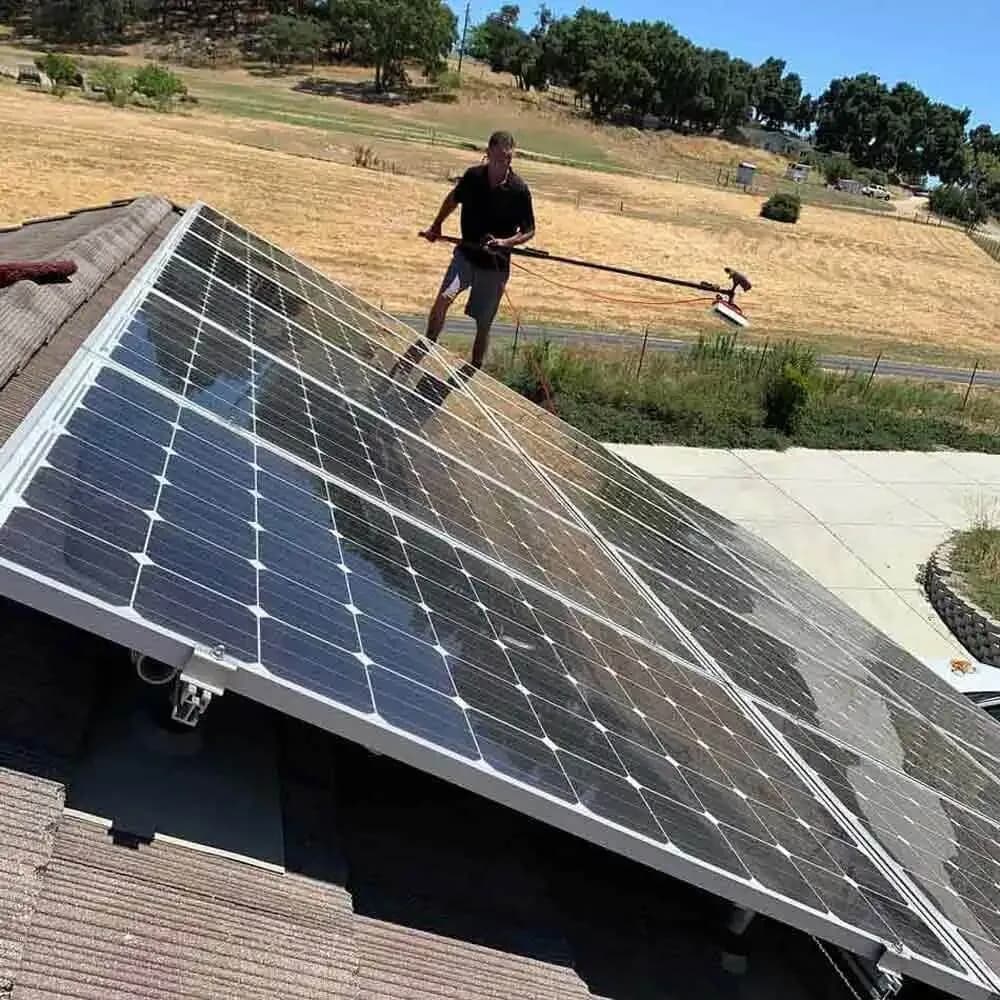
Roof mount and ground mount arrays
Solar Panel Cleaning Services in San Luis Obispo County
Purified water, a soft brush, and nobody standing on your modules. Corey Byler is on the job himself, and it ends with a walk around with you before anything gets packed up.
Mon to Sat, 7am to 6pm · License #17881 · Insured to $1,000,000
Get a fast quote, it takes about five seconds
A rainless summer takes your output a little at a time
Nothing looks wrong from the driveway. The meter tells you something different.
From about May through October the Central Coast can go months without measurable rain. Dust lands a gram at a time, so the array never looks dirty enough to worry about, and the loss compounds quietly all summer. Soiling research in dry California climates generally puts the drop somewhere between five and ten percent by the end of a rainless stretch, and higher next to an active dust source. Around Paso Robles, Templeton and Creston that source is vineyard row work. In Santa Maria and Oceano it is field dust. In Edna Valley it is both, plus harvest traffic every autumn.
The first rain does not fix it. A light October shower wets five months of dust and drags it down the face of each module, then the sun dries it into a hard rim along the bottom edge of every frame, which is exactly where the lowest row of cells sits. Coastal arrays get the slow version of the same thing. Fog in Cambria, Los Osos, Cayucos and Morro Bay holds the dust damp and the salt in the air cements it, and there is never enough water in it to rinse anything away. Nothing here is self cleaning.
Bird droppings are a different failure altogether. Dust spreads its loss thinly across the whole array, but a dropping is opaque and sits on a single cell, and one shaded cell drags down the string it belongs to. A handful of spots can cost more production than a whole summer of dust. They set hard fast in a Paso Robles or Atascadero July, sometimes in a couple of days. Ground mount arrays out in the county collect them along the top rail, because that rail is the best perch for a hundred yards.
How we clean an array
Our own crew, our own equipment, every job. Nothing is handed to a subcontractor at any point, so the person who quoted the array is the person standing next to it.
We look at the array before we wet it
Cracked glass, a scorched or discolored cell, a clamp that has worked loose, chewed or sagging wiring underneath. You hear about all of it before we start rather than after. If something needs your installer, we say so and leave it alone.
Purified water only, no soap in the bucket
Water goes through filters and resin so nothing is left behind when it dries. Anything with a surfactant in it leaves a slight film, and that film is tacky enough to hold the next round of dust, so a soapy clean makes the array dirtier sooner. Plain pure water dries off the glass with nothing on it.
Nobody stands on a module
Panel glass takes a boot badly and the cells underneath crack out of sight, then show up months later as dead spots in your production. We reach roof mount arrays with water fed poles from the edge, off ladders, or from a lift when the pitch needs one. Clay tile gets the same rule, because tile cracks too.
Soft brush, roughly garden hose pressure, no abrasives
Flow does the work, not pressure. High pressure at a frame seal or a junction box is how water gets somewhere it should not be. Baked droppings get soaked and left to soften, then lifted with the brush over a few passes. No pads, no scrapers, nothing that touches the anti reflective coating.
We walk it with you
Every job ends with a walk around before we pack up, and anything you are not happy with gets put right there and then. On a roof mount array that usually means looking at it from the ground together, or at photos if you would rather not climb.
What is included
- Every module face washed with purified water, front glass only
- Soft brush work throughout, with no pads, scrapers or abrasives of any kind
- Baked on bird droppings soaked and lifted rather than scraped off
- The bottom rail of each frame cleared, where the mud rim builds after light rain
- Roof mount arrays worked by pole, ladder or lift, with nobody standing on a module
- Ground mount arrays washed down to the bottom row where splash and field dust collect
- A straight report on anything we notice: cracked glass, a loose clamp, a scorched cell, damaged wiring
- A walk around with you before we leave
What we do not do
Worth saying plainly, so nobody is waiting on something we were never going to do.
- Electrical work of any kind. We do not touch inverters, connectors, conduit or breakers. If something looks wrong we tell you and your solar installer handles it.
- Removing, reseating or replacing panels, and no work on the back of a module.
- Cleaning the roof surface itself. Moss and algae on the tile or shingle around an array is a separate job, see roof cleaning.
- Fitting bird or critter mesh under the array. We can show you where they are getting in, but somebody else installs the guard.
Real reviews, real Central Coast addresses
The light literally shines brighter
Every word below is lifted straight from Corey's Google profile. Nothing written by us, nothing tidied up.
What solar panel cleaning costs around here
Typical Central Coast market rates run roughly $8 to $20 per panel, with most residential rooftop systems of 15 to 30 panels landing somewhere between $150 and $400, and ground mount usually sitting at the lower end. Those are regional ranges to set expectations, not our quote. Send an address and a panel count and you get a real number.
Panel count and how the array is laid out
One clean block of 24 panels on a single roof plane is quicker than the same 24 split across three faces of the house, because every plane means repositioning.
Roof mount or ground mount
Ground mount is faster and safer, so it prices lower per panel. Roof mount adds access time before a single panel gets touched.
Pitch, height and roof covering
A steep hillside lot above San Luis Obispo, a two story in Arroyo Grande, or clay tile anywhere in Paso Robles and Atascadero all slow the job down, because we work off poles and ladders rather than walking the slope.
How long since the last clean
One summer of dust is close to a rinse. Two or three years of harvest dust with baked droppings on top is slow work, soak and repeat rather than one pass.
Access and water
Locked gates, tight side yards, an array set well back on a rural Creston or Cayucos property, and no spigot within reach of the array all add time.
One off or on a schedule
Twice a year costs less per visit than calling once every three years, because the dirt never gets to the stage that needs the slow work.
No obligation, no pressure, no call center
We Guarantee 100% Satisfaction
Every job finishes the same way: a walk around with you before we pack up, so anything you are not happy with gets put right there and then. Corey Byler is the one doing that walk around. Business License #17881, insured to $1,000,000, and no part of the job handed to somebody else.
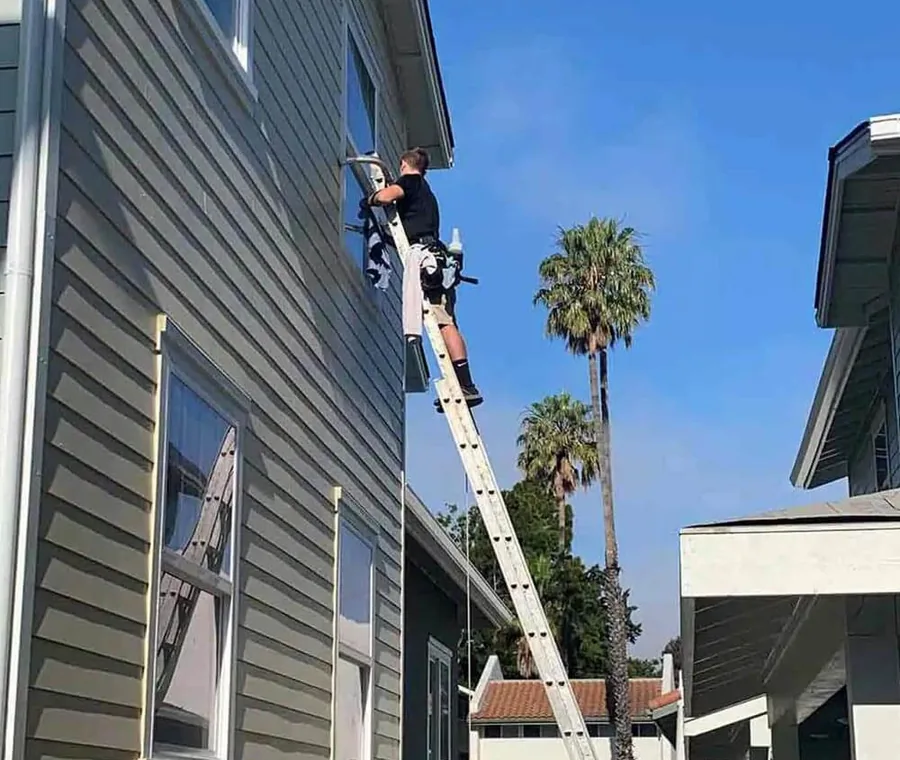
Solar Panel Cleaning questions we get asked
Does cleaning solar panels actually increase output?
Doesn't rain clean solar panels?
How often should solar panels be cleaned on the Central Coast?
Can I clean my own solar panels with soap and a hose?
Do you walk on the panels or on the roof to clean them?
Will bird droppings come off a solar panel without scratching the glass?
Service area
One truck, the whole county
From the fog line in Cambria down to Santa Maria and inland through Paso and Creston. If you are on this list we get out to you. If you are just off it, call anyway and we will tell you straight.
Often booked with this
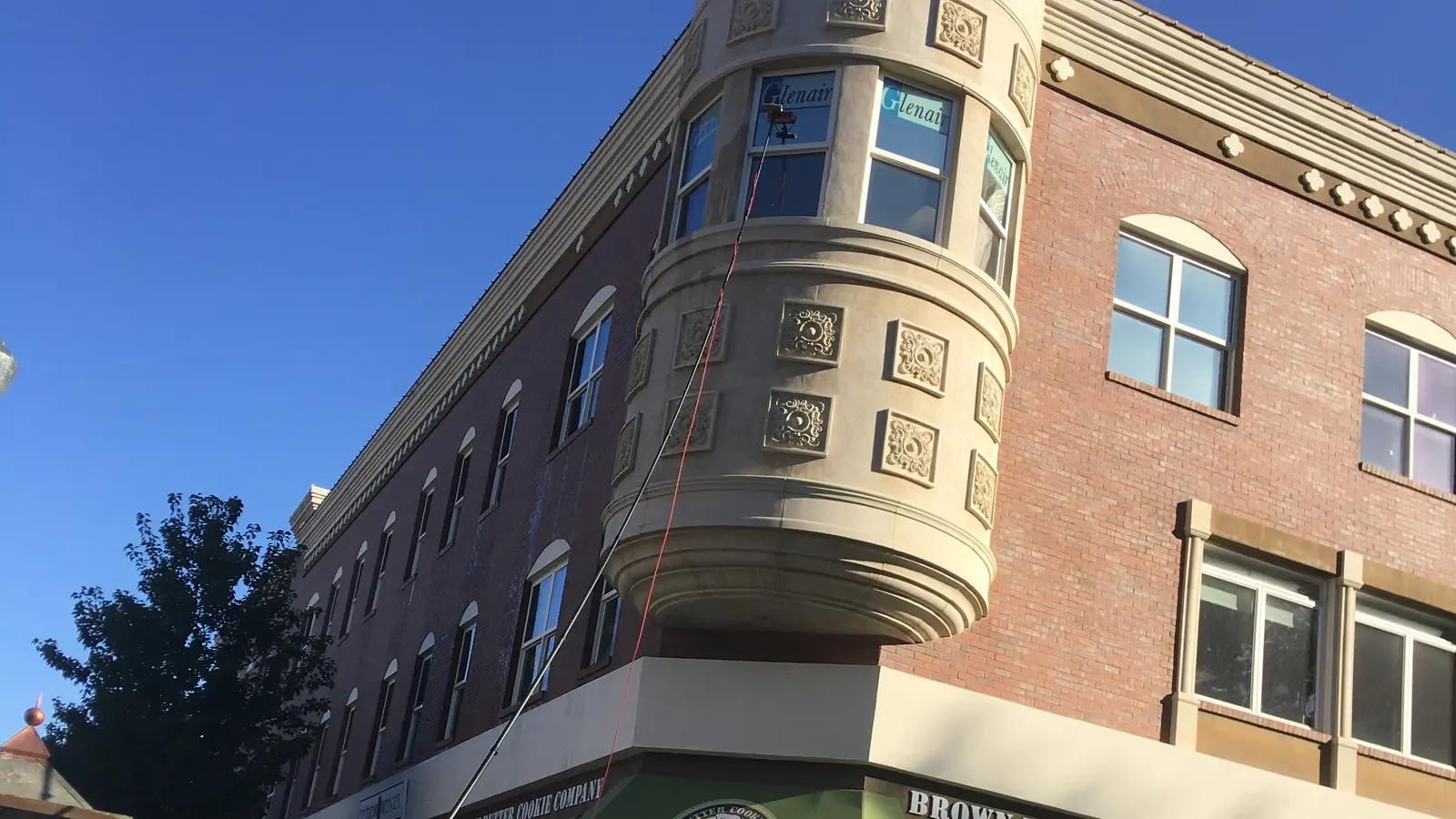
Ready to see what your glass actually looks like?
Send an address and we will get you a real number. Residential or commercial, anywhere from Cambria to Santa Maria.
Monday to Saturday, 7:00 AM to 6:00 PM · Owner operated · Nothing subcontracted