Short answer
Landlords near Cal Poly inspect five things students almost always miss: window tracks, screens, interior glass, sills, and tape or sticker residue on the panes. Vacuum tracks bone dry before any water touches them, or the grit turns to mud and stains the vinyl. Take every screen out, wash it flat, and label it so it goes back into the right opening. Clean the inside of the glass, not just the outside. Lift adhesive with a soaped pane and a fresh razor blade at a low angle, never dry. Book any outside help three to four weeks ahead, because June and September fill fast.
Two weeks in June, two weeks in September, and everybody wants them
Cal Poly runs on quarters. Spring ends in June and fall starts in September, and almost every lease on the streets around campus is written to match. So turnover here does not spread across the year the way it does in a normal town. It lands in two narrow windows, and every landlord from Foothill Boulevard down to Slack Street wants the same two weeks: keys back, unit emptied, cleaned, inspected and re-let before the next quarter starts.
So the calendar fills. Cleaners, carpet guys, junk haulers, painters and window cleaners all take the same calls in the same two weeks. Call during the week you are moving and you get whatever slot is left. Book three or four weeks ahead and you pick your day. There is a second clock too. In California a landlord has 21 days from the day you hand the keys back to return the deposit or send an itemized list of what was kept.
Landlords and property managers feel the same squeeze from the other side. The gap between one tenant leaving and the next arriving is often days rather than weeks. Sequence saves you a full day of it: junk out first, then the interior, then glass and exterior last. Anybody who pressure washes a patio after the windows are done has just re-dirtied the windows, and you end up paying twice for the same panes.
What actually gets inspected
A move out inspection is not a deep clean audit. It is one person walking the unit with a phone, taking photos, working off a list. That tells you where to spend your effort. Anything a photo shows clearly is expensive. Anything it does not show tends to slide. Glass is the worst offender in the place, because it is the one surface where dirt photographs, and it sits behind every other picture they take for the next listing.
The route is predictable. Front door, each room clockwise, windows and window coverings, floors and baseboards, then kitchen, then bathroom, then the garage, patio, walkway and whatever exterior the lease made yours. Near campus it is often a property manager doing six or eight of these in a single day. Fast inspections check the same short list every time, which is good news for you. Once you know the list you can work it in an afternoon.
- Window tracks and sills, slid open and looked into
- Screens: present, undamaged, washed, back in the right opening
- Interior glass, especially the kitchen window and the sliding door
- Adhesive on the panes: tape, putty, hooks, string light clips
- Walls: holes, scuffs, and any color not on the lease
- Oven, range hood filter, fridge seals and the crisper tray
- Bathroom grout, the exhaust fan cover and the shower door glass
- Floors, baseboards and the corners a vacuum never reached
- Garage floor, patio, walkway, and anything left on the curb
Window tracks: start dry or you make it worse
Tracks are the most reliable deduction on the list. A year in San Luis Obispo packs the bottom channel with grit, stucco dust and dead bugs, and the aluminum sliders off Grand and Ramona run deep. The part everybody gets wrong is the water. Do not start with it. Wet grit turns to mud, the mud smears into the corners and the sealant, and on white vinyl it leaves a gray mark that does not come out.
Vacuum the track bone dry first, with a crevice tool or a shop vac, and take out everything loose. Break the packed corners with a stiff dry paintbrush or an old toothbrush, then vacuum again. Only now go in wet, with warm water and a drop of dish soap, using a microfiber cloth wrapped around the tip of a flathead screwdriver so you can get square into the corner. Dry the channel when you finish.
A damp track collects the next lot of dust straight away, and in a shaded room it grows mold in the corner inside a week. While you are down there, clear the weep holes at the outside edge of the bottom channel. They drain rain out of the frame, they clog with the same grit, and a blocked one floods your sill. Wipe the sills after the tracks, never before, because clearing a track throws dirt straight onto them.
Screens, sticker residue, and the glass nobody cleans on the inside
Screens are the item nobody has touched all year. Pop the tabs or squeeze the plunger pins, take them out, and lay them flat on the grass or the driveway. Wash with soapy water and a soft brush, rinse from one side, then stand them on edge to dry before they go back. Do not pressure wash a screen. It blows the mesh out of the spline and turns a cleaning job into damage you now owe for.
Label them as you pull them, with painter's tape on the frame and the room written on it. Screens are cut to individual openings and are not interchangeable, even where every window looks identical, and one that will not go back in is a charge. If a frame is bent or the mesh torn already, photograph it and tell your landlord before you touch it.
Then the adhesive. A year of string lights, command hooks, mounting putty, packing tape and a parking decal leaves the panes covered in it. Never dry scrape. A dry blade drags grit across the glass, and a scratched pane is a glass replacement charge, not a cleaning one. Soap the pane, keep it wet, and run a fresh razor across at a low angle in one direction. Change the blade the second it stops gliding.
Two surfaces you never razor. Tempered glass, which is most patio doors and any pane near the floor, can carry fabrication debris in the surface, and a blade will drag it and leave permanent marks. Look for the small etched stamp in a corner. The other is aftermarket tint film, which sits on the room side and shreds instantly. For both, warm the residue with a hair dryer and lift it with a plastic scraper.
The checklist, in order
Order matters more than product. Work top to bottom, dry before wet, and leave the glass until last so nothing else can dirty it again. Interior glass is the blind spot. People clean the outside because that is the side that looks dirty from the street, and leave a year of cooking film and hand marks on the inside. Clean the inside with horizontal strokes and the outside with vertical, and any streak tells you which side it is on.
Photograph everything, dated, on the day you leave. Every room, every window, the tracks with daylight behind them, the garage floor, the trash area. Photos settle almost every argument that follows and they cost you nothing. California also lets you request an initial inspection before the tenancy ends. Ask for it and you get an itemized list of what would be deducted while there is still time to fix it. Civil Code 1950.5 is worth twenty minutes of reading.
- Strip the walls and windows: hooks, clips, string lights, decals.
- Pull every screen and label each frame with painter's tape.
- Vacuum every track bone dry, brush the corners, vacuum again.
- Go back over the tracks wet, corners included, then dry them.
- Wash the screens flat with a soft brush, stand them to dry.
- Soap the glass and razor off adhesive, skipping tempered and tinted panes.
- Clean interior glass with horizontal strokes, exterior with vertical.
- Wipe sills and frames, then the blinds, slat by slat.
- Refit each screen into the opening it came out of.
- Sweep and rinse the patio, walkway and garage floor.
- Photograph every room, window and track before handing back the keys.
When paying somebody makes sense, and when it does not
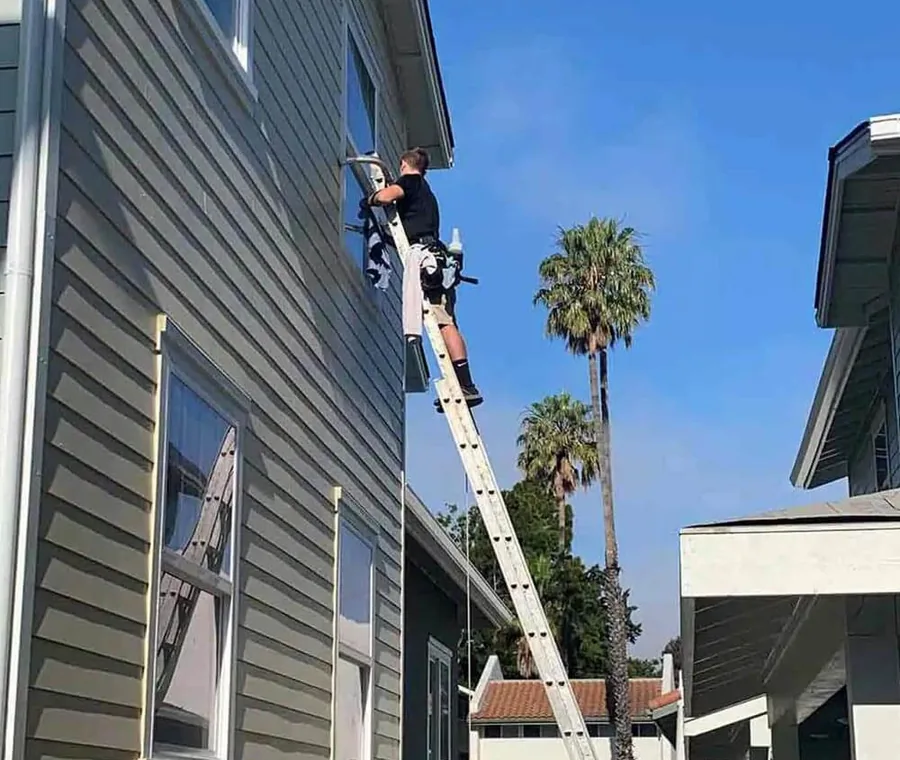
Plenty of this you can do yourself, and you should. A student with a shop vac, an old toothbrush, a pack of razor blades and a free Saturday will get a unit through inspection without paying anybody. What tips it the other way is height, volume and the calendar: second story glass you cannot reach safely from inside, twenty openings in one house, four housemates splitting a bill, or a landlord who wants the place turned in three days.
One thing is genuinely not your fault. The chalky white spotting on the lower outside panes of ground floor windows is sprinkler overspray drying on the glass and leaving hard water minerals behind. It builds over years, it is often there before you move in, and ordinary cleaning will not shift it. Sometimes a restoration takes it off, and sometimes the mineral has etched the glass and it is permanent. Flag it in writing rather than letting it become a deduction.
For property managers running several units near campus, book the whole block on one date. We work Monday to Saturday, 7:00 AM to 6:00 PM, and June and September fill first, so a date held in April costs nothing. Business License #17881, insured to $1,000,000, certificate on request, which is the paperwork most management companies want before anybody sets foot on site. Our office at 265 Foothill Blvd is minutes from most student rentals, with a second location in Atascadero.
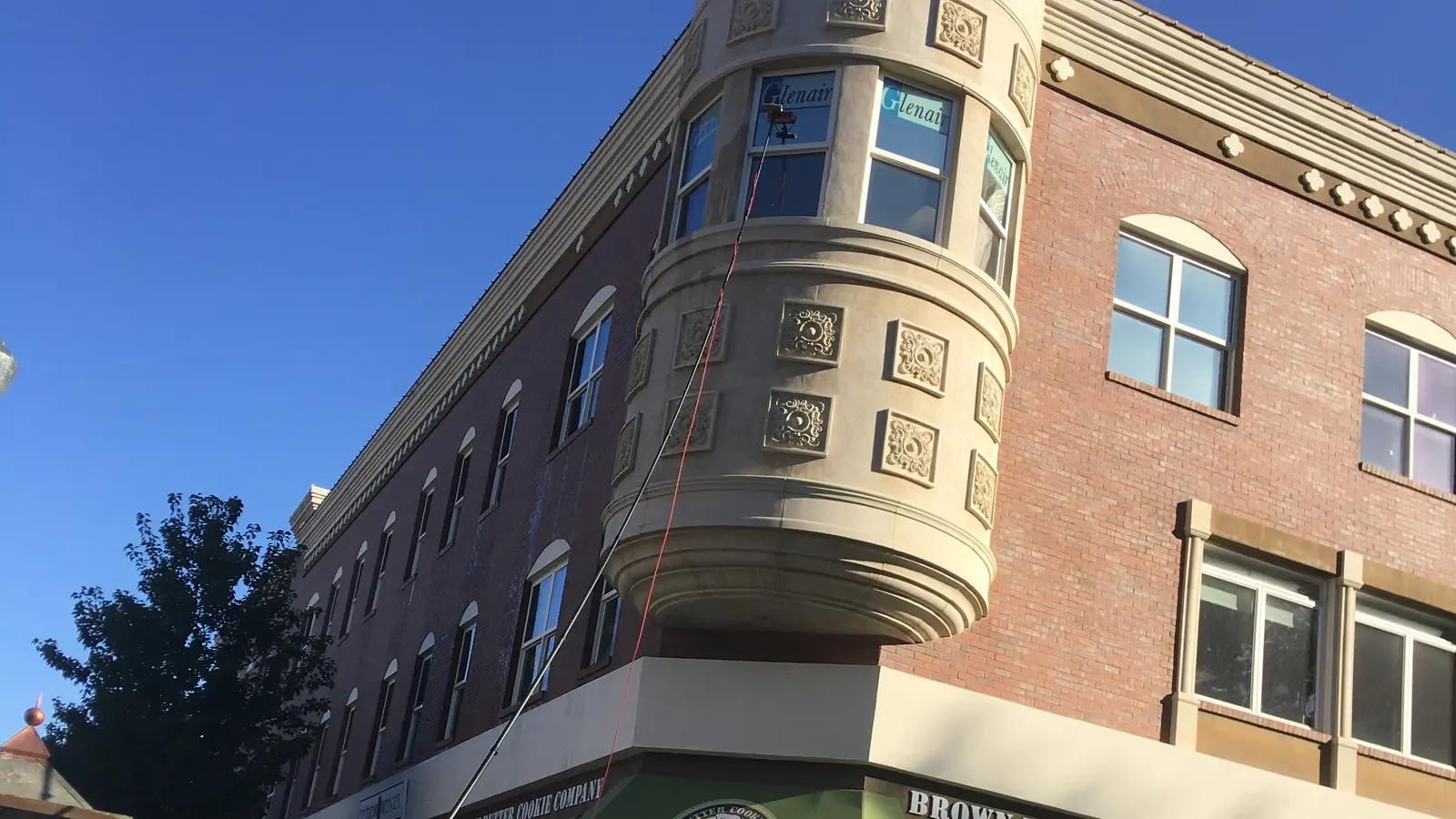
What we handle on a move out is the glass side: exterior and interior panes, tracks cleared, sills and frames wiped, screens out and washed, plus pressure washing a patio, walkway or driveway if the lease made those yours. We do not do interior housekeeping, and we do not repair or rescreen a torn screen, though we will tell you which ones need it. Corey Byler is on the job himself, nothing gets subcontracted, and every job ends with a walk around before we pack up.
Questions people ask about this
What do landlords check most often at a Cal Poly move out?
How do you clean window tracks with a year of dirt packed in them?
How do I get sticker and tape residue off a window without scratching it?
When should I book move out cleaning in San Luis Obispo?
Do I have to take the window screens out before I move out?
Related on this site